In Everyday Use the Author Describes Dee Wangero as Determined
Point of View in Everyday Use by Alice Walker Point of view is described as the perspective from which a story is told Literature G25. After highlighting a few passages from the story it is mentioned that Dee Wangero has joined the black nationalists of the 1960s and 1970s and she shows it by changing both her name and her style.
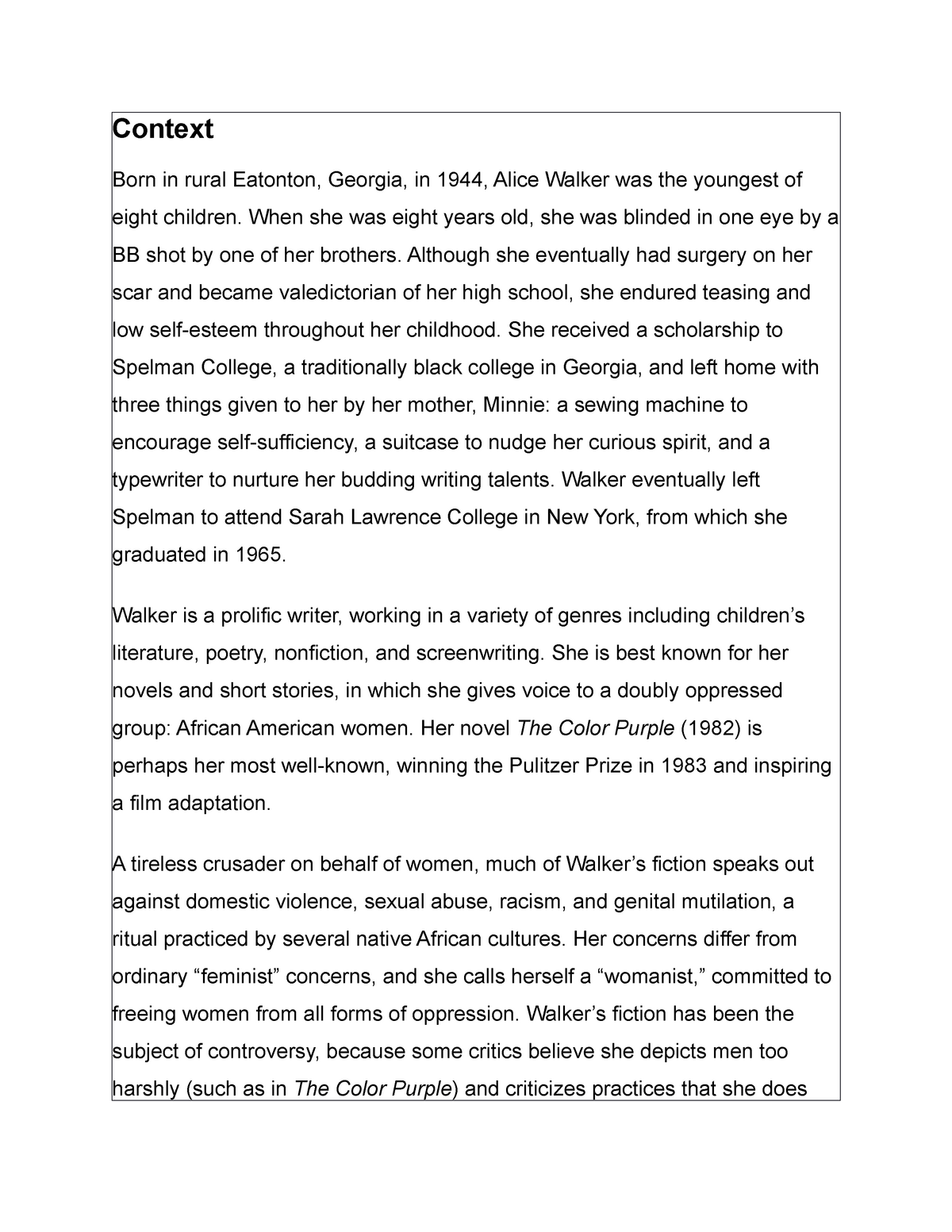
Summary Everyday Use 1 Context Born In Rural Eatonton Georgia In 1944 Alice Walker Was The Studocu
In Alice Walkers story Everyday Use she describes two sides of the same coin when it comes to heritage.
. Wangeros interest in her heritage isnt because she wants to embrace her culture but to on top of trends. The story centers around Dees visit with her family at her childhood home in the Deep South. The theme of this story is that of a mother.
Maggie who stays at home with Mama and lives their heritage through traditions which are passed down. Dee a young well-educated and self-confident African-American woman is Mama s daughter and Maggie s sister. The physical setting is the yard and inside of a small old home.
Words lies other folkss habits The energetic daughter is as frivolously careless of other peoples lives as the fiery conflagration that she had watched ten years previously. The three main characters in this short story are Mama Dee Wangero and Maggie. Everyday Use takes place in the rural south of America in the early 1970s.
Maggie hung back in the kitchen over the dishpan. The historical time period and the physical surroundings of the characters. Dees judgmental nature has affected Mama and Maggie and desire for Dees approval runs deep in both of themit even appears in Mamas daydreams about a televised reunion.
In Everyday Use Alice Walker argues that an African-American is both African and American and to deny the American side of ones heritage is disrespectful of ones ancestors and consequently harmful to ones self. Maggie knows how to quilt. The story is told by the mother in the story.
32 Dee Wangero Dee has from her childhood onwards an aversion to the traditional lifestyle of her family. And Dee who becomes enthralled with the concept of African-nationalism practicing new habits which alter her psyche. Johnson displays a powerful character who appreciates her culture and fights for it.
As a child Dee was angry bitter and resentful towards her family and their poverty. Mama narrates the story. The climax of Everyday Use occurs when.
Everyday Use focuses on an encounter between members of the rural Johnson family. There are two different aspects of a story that create its setting. She was determined to stare down any disaster in her efforts.
In her short story Everyday Use Alice Walker takes up what is a recurrent theme in her work. The mother takes the quilts from Dee and gives them to Maggie. The two sisters in the story are described as two complete opposites in personality how they carry themselves and even overall appearance.
The correct answer is A. Baker and Charlotte Pierce-Baker Dee or Wangero is called a goddess. Alice Walkers Everyday Use a short story written in the late 1960s is a story of cultural discrepancies in the American society of the 50s and 60s caused by racial issues.
In the essay Stylish vs. Sacred in Everyday Use written by Houston A. The butter churn top a bench Grandma Dees quilt.
Near the end of Everyday Use the mother who is the tales narrator realizes that Dee aka Wangero is a fantasy child a perpetrator and victim of. Character Analysis Of Maggie In Everyday Use By Alice Walker. In the story Everyday Use the point of view is that of first person narrator or major character.
Dee demands to take various household objects with her to decorate her apartment including. Dee is portrayed as selfish and phony based on the things she does. The representation of the harmony as well as the conflicts and struggles within African-American culture.
On page 80 Dee proclaims her new name is Wangero Leewanika Kemajo and Mama immediately begin referring to her as Wangero. Sometimes Maggie reads to me. The author of Everyday Use Alice Walker portrays that society values people like Dee more so than Maggie.
They had been pieced by Grandma Dee and then Big Dee and me had hung them on the quilt frames on the front porch and quilted them. Dee is the object of jealousy awe and agitation among her family members while as an individual she searches for personal meaning and a stronger sense of self. In Everyday Use the author describes Dee Wangero as determined to stare down any disaster in her efforts.
She claims that Mama and Maggie dont understand their heritage but she is the one overlooking the important aspects of her family history. She uses the principal characters of Mama Dee Wangero and Maggie to clarify this theme. When Mama wont let her have the quilts to display she becomes furious.
Up to 24 cash back likeakinkymuletailIhearMaggiesuckinherbreathUhnnnhiswhatitsoundslikeLikewhenyousee. Which sentence about Maggie provides contrast to these traits. This continues until paragraph 3 on page 81 where she is referred to by Mama as WangeroDee.
Out came Wangero with two quilts. While Dee believes that her embrace of her African roots and the African name Wangero is a form of resistance to racism her new-found identity comes across as a self-indulgent intellectual exercise when contrasted with her familys daily experience of. After dinner Dee Wangero went to the trunk at the foot of my bed and started rifling through it.
One was in the Lone Star pattern. Read an in-depth analysis of Dee. 12172017 English Middle School answered In Everyday Use the author describes Dee Wangero as determined to stare down any disaster in her efforts Which sentence about Maggie provides contrast to these traits.
Other times Mama refers to her as Dee Wangero. When Dee returns to the familys house. When Dee changed her name as Wangero Cowart explains that it was a betrayal because it was inappropriate to change the name she was given Cowart 172.
At the end Dee tells her mother and sister that they dont understand their heritage and. Dee is educated worldly and deeply determined not generally allowing her desires to be thwarted. This encounterwhich takes place when Dee the only member of the family to receive a.
Johnson wants Maggie to have the quilts for everyday use and does not want Dee Wangero to take them with her.

Everyday Use By Alice Walker Docx Alice Walker S Theme On Culture And Heritage In Everyday Use In Her Story Everyday Use Alice Walker Expresses Her Course Hero

In Everyday Use The Author Describes Dee Wangero As Determined To Stare Down Any Disaster In Brainly Com
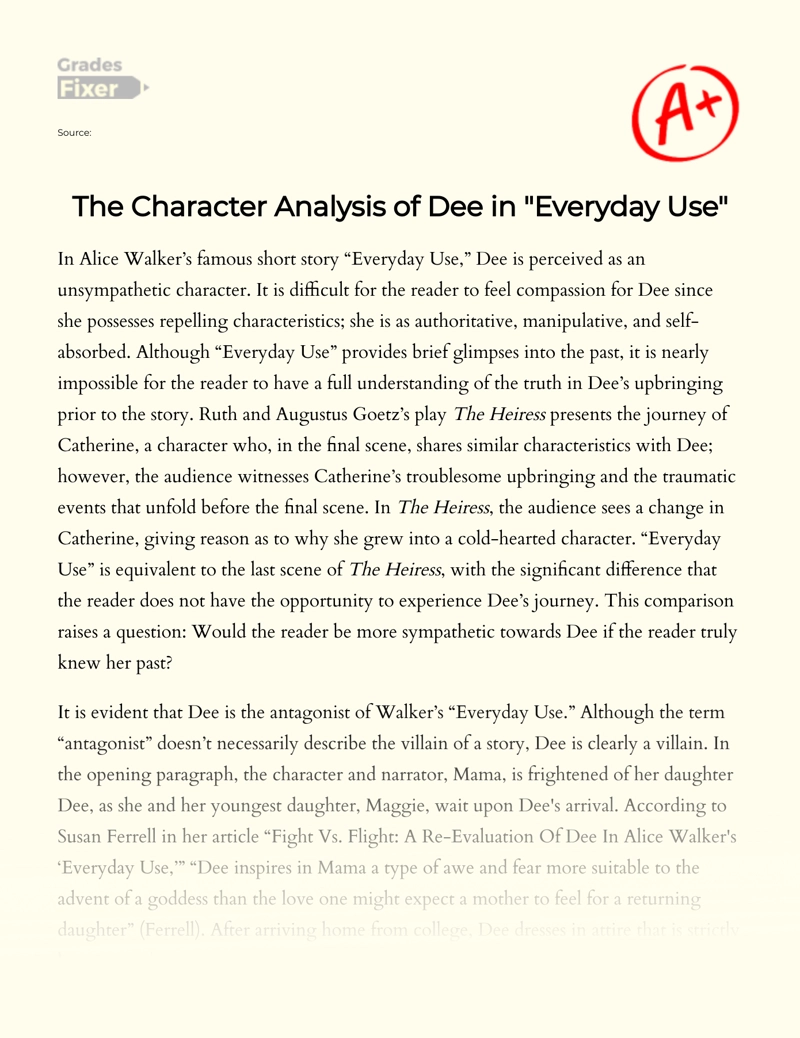
The Character Analysis Of Dee In Everyday Use Essay Example 1247 Words Gradesfixer
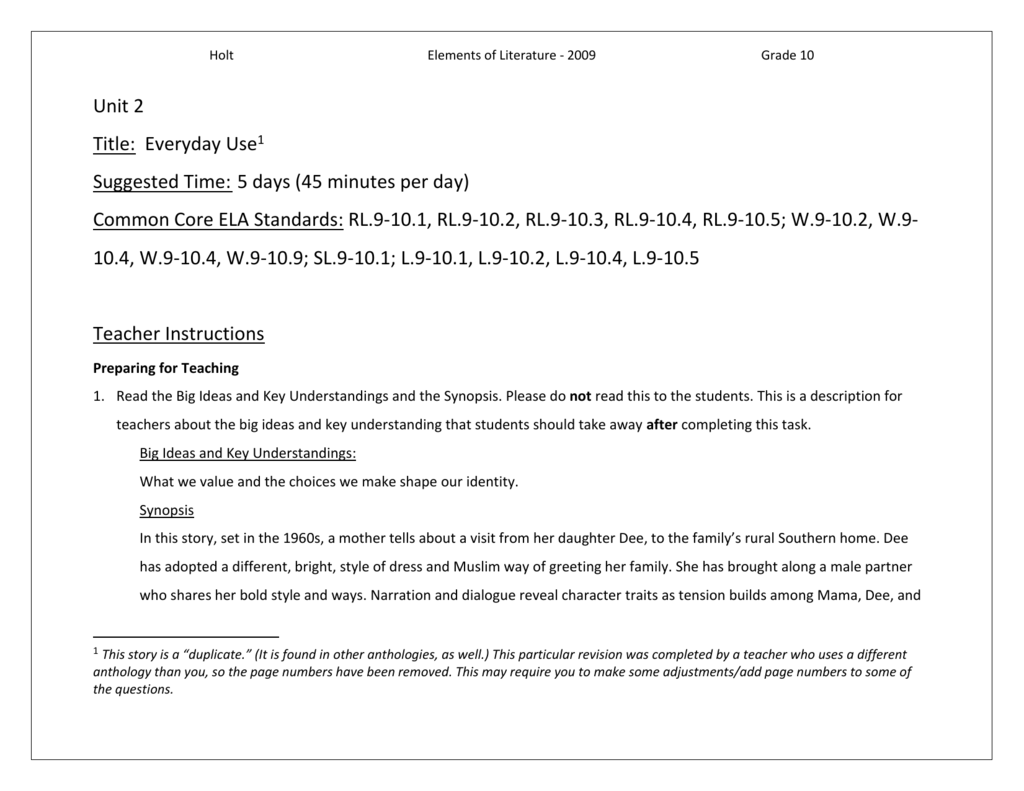
Everyday Use Achieve The Core
0 Response to "In Everyday Use the Author Describes Dee Wangero as Determined"
Post a Comment